
The Asset Matrix: Deconstructing True Value Across Diverse Categories
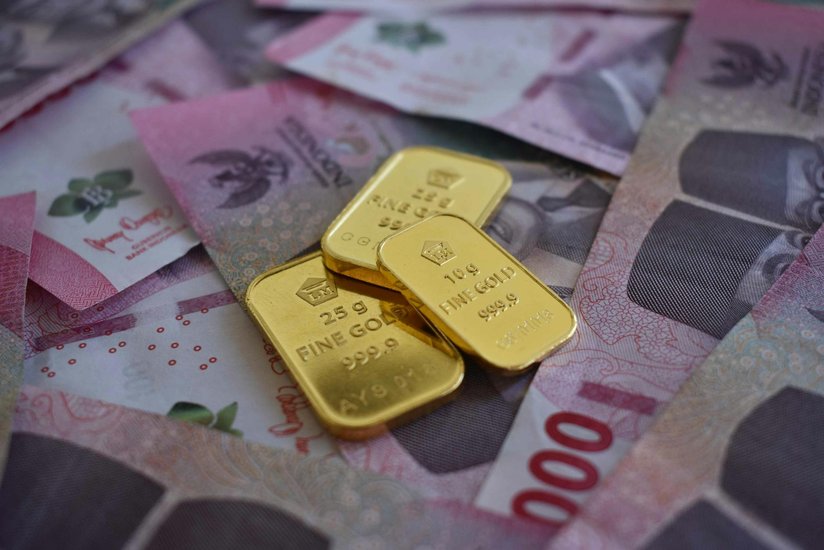
As a world-class expert in 'Assets', I can tell you that few concepts are as fundamental to economics, finance, and business as the asset. Yet, for something so ubiquitous, its true depth and multifaceted nature often remain underexplored. An asset, at its core, is an economic resource with probable future economic benefits, controlled by an entity as a result of past transactions or events. Simple, right? Not quite.
The real power in understanding assets lies not just in their definition, but in appreciating their diverse forms, characteristics, and strategic implications. Just as a master craftsman understands the nuances of different materials, a true financial expert discerns the unique qualities and potential of various asset types. This post will serve as your guide through 'The Asset Matrix', comparing and contrasting key categories to reveal their distinct roles in wealth creation, operational efficiency, and long-term strategic advantage.
We’ll navigate through the fundamental distinctions that every investor, business leader, and aspiring financial expert must grasp. By the end, you'll possess a more refined lens through which to view the balance sheet and, more importantly, the underlying economic reality it represents.
Tangible Assets vs. Intangible Assets: The Visible and The Invisible
Perhaps the most intuitive distinction in the asset universe is between what you can touch and what you cannot. Yet, the relative importance and valuation challenges of these two categories have dramatically shifted, especially in the modern economy.
Tangible Assets: The Physical Foundations
Tangible assets are physical items that have intrinsic value or that derive value from their physical form. These are the assets most people picture when they think of wealth: real estate, machinery, vehicles, inventory, and even cash. They are fundamental to many businesses, providing the physical infrastructure and operational capacity required for production and service delivery.
Characteristics:
- Physical Form: They exist in a physical state, occupying space.
- Depreciation: Most tangible assets, except land, lose value over time due to wear and tear, obsolescence, or usage. This loss is accounted for as depreciation.
- Easier Valuation: Often easier to value due to observable market prices, comparable sales, or cost of replacement.
- Collateral Value: Frequently used as collateral for loans due to their clear physical presence and market liquidity.
Think of a manufacturing plant: its buildings, production lines, and raw materials are all tangible assets directly contributing to its output and market value.
Intangible Assets: The Invisible Engines of Value
Intangible assets, by contrast, lack physical substance but nonetheless possess significant economic value. In today's knowledge-based economy, these assets frequently represent the lion's share of a company's market capitalization, far exceeding its book value. Examples include patents, trademarks, copyrights, brand recognition, software, customer lists, proprietary technology, and goodwill.
Characteristics:
- No Physical Form: Their value is derived from legal rights, intellectual property, or inherent advantages rather than physical presence.
- Amortization: For many intangible assets with finite useful lives (like patents), their cost is spread over time through amortization. Those with indefinite lives (like goodwill) are tested for impairment.
- Challenging Valuation: Often significantly harder to value due to their unique nature, lack of direct market comparables, and dependence on future economic benefits that are difficult to project.
- Competitive Advantage: Frequently provide a sustainable competitive advantage, enabling higher margins, market dominance, or unique product offerings.
Consider a tech giant: while it has buildings and servers (tangible), its true wealth lies in its software algorithms, brand recognition, patents, and user data (intangible).
Key Takeaways on Tangible vs. Intangible
While tangible assets provide a solid base, intangible assets are increasingly the drivers of innovation, differentiation, and long-term shareholder value. Understanding how to create, protect, and monetize both types is paramount for sustainable growth.

Current Assets vs. Non-Current Assets: Liquidity and Long-Term Strategy
Another crucial distinction, particularly for financial analysis and liquidity management, is based on an asset's expected conversion to cash or consumption within a specific timeframe, typically one year. This classification reveals much about a company's short-term solvency and long-term strategic commitments.
Current Assets: Liquidity and Operational Flow
Current assets are those economic resources expected to be converted into cash, sold, or consumed within one year or one operating cycle, whichever is longer. They are vital for managing day-to-day operations and ensuring a company's short-term financial health.
Characteristics:
- High Liquidity: Designed to be readily convertible into cash.
- Short-Term Use: Directly support immediate operational needs.
- Working Capital: Form the basis of a company's working capital, indicating its ability to meet short-term liabilities.
Examples: Cash and cash equivalents, marketable securities (short-term investments), accounts receivable (money owed by customers), inventory, prepaid expenses.
A retail store relies heavily on current assets like inventory to make sales and cash to pay its immediate bills.
Non-Current Assets: Long-Term Growth and Strategic Holdings
Non-current assets (also known as fixed assets or long-term assets) are not expected to be converted into cash, sold, or consumed within one year. They are acquired for long-term use in the business to generate revenue and provide a long-term benefit, not for short-term resale.
Characteristics:
- Low Liquidity: Not easily or quickly converted to cash without disrupting operations.
- Long-Term Value: Held for their productive capacity over many years.
- Strategic Investment: Represent significant capital expenditures and long-term strategic decisions.
Examples: Property, plant, and equipment (PP&E), long-term investments, intangible assets (like patents and brand names which have long useful lives), natural resources.
A utility company's power plants, transmission lines, and real estate are classic examples of non-current assets, representing massive, long-term investments.
Understanding Asset Liquidity and Strategy
The balance between current and non-current assets is a critical indicator of a company's financial structure and operational strategy. Too few current assets can lead to liquidity crises, while an over-reliance on non-current assets requires robust long-term financing.

Other Crucial Asset Distinctions for the Expert
Beyond the primary classifications, further distinctions offer deeper insights into asset management and financial performance.
Financial Assets vs. Non-Financial Assets
This distinction categorizes assets based on whether they derive value from contractual claims or from their intrinsic physical/intellectual properties.
- Financial Assets: Represent claims to future payments or the ownership of an entity. They include stocks, bonds, mutual funds, derivatives, and accounts receivable. Their value is derived from what they represent (a share in a company, a promise of interest payments).
- Non-Financial Assets: Encompass physical assets like property, plant, and equipment (PP&E), inventory, and natural resources, as well as intangible assets like patents and trademarks. Their value is intrinsic or derived from their unique intellectual property.
Operating Assets vs. Non-Operating Assets
This classification focuses on an asset's direct contribution to a company's core business operations.
- Operating Assets: Assets that are actively and directly used in the day-to-day operations of a business to generate revenue. Examples include inventory, machinery, equipment, patents critical to product lines, and operational cash.
- Non-Operating Assets: Assets not directly involved in the core operations but may still generate revenue or hold value. Examples include excess cash, short-term marketable securities held purely for investment (not operational liquidity), vacant land held for future sale, or a subsidiary that operates in a completely different industry from the core business. Analyzing these separately can help in determining the true operational efficiency of a company.
Tips for Holistic Asset Management
A comprehensive understanding of all asset categories empowers better investment decisions, more accurate valuation, optimized capital allocation, and robust risk management strategies. Diversifying asset types can hedge against various market risks.

The Asset Matrix: A Comparative Summary
To crystallize these distinctions, here's a comparative overview of the major asset types discussed:
| Asset Type | Definition | Key Characteristic | Valuation & Risk Impact | Examples |
|---|---|---|---|---|
| Tangible | Physical assets with substance | Visible, can be touched, typically depreciates (except land) | Often easier to value, good collateral, subject to physical damage | Buildings, machinery, inventory, land |
| Intangible | Non-physical assets deriving value from rights/knowledge | Invisible, often amortized, provides competitive advantage | Challenging to value, risk of obsolescence, key for modern enterprise value | Patents, trademarks, brand equity, software, goodwill |
| Current | Expected to convert to cash within one year/operating cycle | High liquidity, short-term focus, part of working capital | Crucial for short-term solvency, sensitive to operational cycles | Cash, accounts receivable, inventory |
| Non-Current | Held for long-term use, not expected to convert within one year | Low liquidity, long-term focus, strategic investments | Forms productive capacity, critical for long-term strategy, capital intensive | PP&E, long-term investments, long-lived intangibles |
| Financial | Represents a contractual claim to future payments | Often highly liquid, subject to market fluctuations | Value depends on market confidence and issuer's stability | Stocks, bonds, derivatives, accounts receivable |
| Non-Financial | Physical or intellectual property, not a financial claim | Intrinsic value, often provides productive capacity | Value depends on utility, scarcity, and market demand | Real estate, machinery, intellectual property |
| Operating | Directly contributes to core business operations | Essential for generating primary revenue | Reflects core business efficiency and productivity | Inventory, operational machinery, key patents |
| Non-Operating | Not directly used in core business operations | May generate revenue, but secondary to core business | Can obscure true operational performance, potential for divestment | Excess cash, vacant land, passive investments |
The mastery of assets extends far beyond simply listing them on a balance sheet. It involves a deep, nuanced understanding of their specific characteristics, their role in wealth creation, and their contribution to a company's strategic objectives and financial health. The comparisons outlined above—Tangible vs. Intangible, Current vs. Non-Current, Financial vs. Non-Financial, and Operating vs. Non-Operating—provide a robust framework for such mastery.
In an ever-evolving global economy, where value increasingly shifts from physical might to intellectual prowess, and where liquidity can be both a blessing and a curse, the ability to correctly identify, value, manage, and leverage diverse asset categories is the hallmark of true financial expertise. Embrace this multi-dimensional view of assets, and you will unlock profound insights into economic performance, risk management, and strategic opportunity.
Deja una respuesta