
Navigating the Nexus: Your Deep Dive into the World of Markets

Welcome, esteemed readers, to an in-depth exploration of one of the most fundamental yet complex concepts in economics and business: the 'Market'. As a world-class expert, I'm here to demystify this pervasive force that shapes economies, drives innovation, and influences our daily lives. From the bustling physical bazaars of ancient times to the hyper-speed electronic exchanges of today, markets are the beating heart of commerce, connecting needs with solutions.
Understanding markets isn't merely academic; it's a critical skill for entrepreneurs, investors, policymakers, and consumers alike. In an era of unprecedented global interconnectedness and rapid technological evolution, the dynamics of markets are more fluid and impactful than ever before. This post is designed as an FAQ-heavy guide, tackling the 10 most common and crucial questions about markets, offering you a comprehensive and actionable understanding.
Key Takeaway: The Market's Essence
At its core, a market is any arrangement that allows buyers and sellers to interact and transact. It's not just a physical place but a dynamic mechanism for allocating resources, discovering prices, and facilitating the exchange of goods, services, and financial instruments.
1. What Exactly is a "Market"?
In its broadest sense, a "market" is a platform, mechanism, or institution where buyers and sellers meet to facilitate the exchange of goods, services, or financial assets. This interaction leads to price discovery and the allocation of resources within an economy. Crucially, a market doesn't have to be a physical location; it can be an online platform, a network of relationships, or even an abstract concept. What defines a market is the interaction between supply (what sellers offer) and demand (what buyers seek) to determine prices and quantities exchanged.
2. What Are the Different Types of Markets?
Markets are incredibly diverse and can be classified in numerous ways:
- By Product/Service: Goods markets (e.g., consumer electronics, agriculture), Service markets (e.g., healthcare, consulting), Financial markets (e.g., stock market, bond market, foreign exchange market), Labor markets.
- By Geographic Scope: Local, regional, national, international, or global markets.
- By Competition: Perfect competition (many small firms, homogenous products), Monopolistic competition (many firms, differentiated products), Oligopoly (few dominant firms), Monopoly (single seller).
- By Time Horizon: Spot markets (immediate delivery), Futures markets (delivery at a future date).
- By Interaction: Physical markets (traditional stores, auctions), Virtual/Online markets (e-commerce platforms, digital exchanges).
Each type has unique characteristics, influencing everything from pricing strategies to regulatory frameworks.

3. Who Are the Main Participants in a Market?
Markets are vibrant ecosystems powered by diverse participants:
- Buyers: Consumers (individuals purchasing for personal use), Businesses (acquiring inputs or services), Governments (procuring public goods and services).
- Sellers: Producers, manufacturers, service providers, retailers, and distributors who offer goods or services.
- Intermediaries: Brokers, agents, wholesalers, and online platforms that facilitate transactions between buyers and sellers, often adding value through logistics, information, or trust.
- Regulators: Government bodies and self-regulatory organizations that set rules, ensure fair play, prevent monopolies, and protect consumers and investors.
- Financial Institutions: Banks, investment firms, and insurance companies that provide capital, manage risk, and offer payment systems.
4. What Are the Primary Functions of a Market?
Markets serve several critical functions within an economy:
- Price Discovery: Through the interaction of supply and demand, markets establish equilibrium prices that reflect the value of goods and services.
- Resource Allocation: Prices act as signals, guiding producers to allocate resources to where they are most demanded and valued, thereby optimizing economic efficiency.
- Facilitating Exchange: Markets provide the mechanisms for efficient transactions, reducing search costs and friction between buyers and sellers.
- Information Dissemination: Market prices and trading volumes convey valuable information about scarcity, preferences, and future expectations.
- Risk Management: Financial markets, in particular, offer instruments (like derivatives) to hedge against price fluctuations and other risks.
5. How Do Supply and Demand Influence Market Dynamics?
Supply and demand are the foundational forces driving market dynamics. The law of demand states that, all else being equal, as the price of a good or service rises, the quantity demanded falls. Conversely, the law of supply states that, all else being equal, as the price rises, the quantity supplied increases. The intersection of the supply curve and the demand curve determines the equilibrium price and quantity in a market. Any shift in factors affecting either supply (e.g., production costs, technology) or demand (e.g., consumer income, tastes, population) will cause a new equilibrium to be established, leading to price and quantity adjustments. Understanding these shifts is paramount for forecasting market movements.
Expert Tip: Beyond the Basics
While basic supply and demand are crucial, remember that real-world markets often exhibit complexities like externalities, information asymmetry, and behavioral biases that can distort these fundamental forces. A truly world-class market expert considers these nuanced layers.
6. What is Market Efficiency, and Why is it Important?
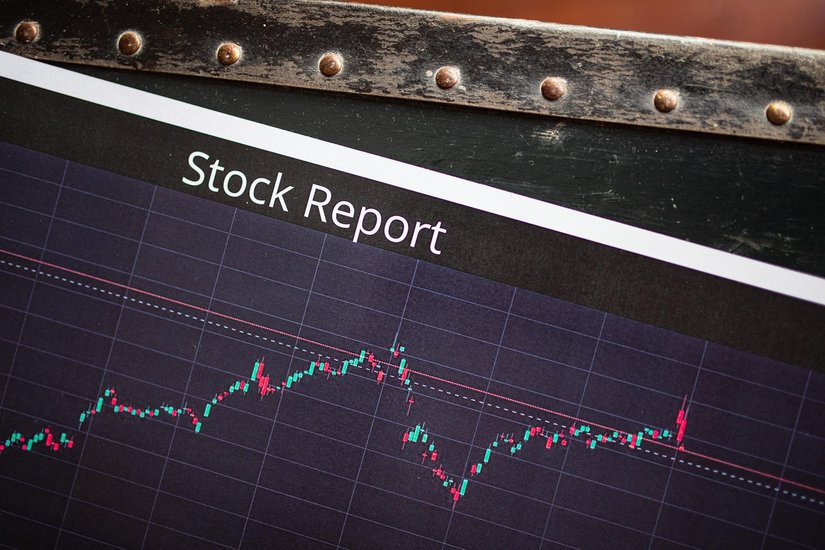
Market efficiency refers to the extent to which market prices reflect all available information. The Efficient Market Hypothesis (EMH) posits three forms: weak-form efficiency (prices reflect past trading data), semi-strong form efficiency (prices reflect all publicly available information), and strong-form efficiency (prices reflect all public and private information). In a perfectly efficient market, it would be impossible to consistently "beat the market" because all information is already priced in. Market efficiency is important because it implies optimal capital allocation, promotes fairness by ensuring no single participant has an unfair informational advantage, and builds investor confidence. While perfect efficiency is largely theoretical, striving for it through robust regulation and transparency is a key goal for financial systems.
7. How Do Technological Advancements Impact Markets?
Technology is a transformative force, continuously reshaping markets. The internet and digital platforms have enabled e-commerce, creating global marketplaces accessible 24/7. Automation, artificial intelligence (AI), and blockchain are revolutionizing trading, supply chain management, and data analysis, making markets faster, more transparent, and often more decentralized. For instance, AI-driven algorithms now execute trades in milliseconds, while blockchain promises to disrupt traditional financial intermediaries. These advancements reduce transaction costs, increase market access, democratize information, and foster entirely new product categories and business models, but also introduce new challenges related to cybersecurity, data privacy, and ethical considerations.
8. What is Market Research, and Why is it Crucial?
Market research is the systematic process of gathering, analyzing, and interpreting data about a market, including its customers, competitors, and trends. It is absolutely crucial for any business or organization seeking to succeed. Its importance stems from:
- Identifying Opportunities: Uncovering unmet needs or emerging trends.
- Understanding Customers: Gaining insights into demographics, behaviors, preferences, and pain points.
- Assessing Competition: Analyzing competitors' strengths, weaknesses, strategies, and market share.
- Mitigating Risks: Predicting potential challenges and validating business decisions.
- Informing Strategy: Guiding product development, pricing, promotion, and distribution strategies.
Effective market research is the bedrock of informed decision-making, transforming uncertainty into actionable intelligence.
9. How Do Global Markets Differ from Local Markets?
While both global and local markets facilitate exchange, their scope and complexities differ significantly:
- Geographic Reach: Local markets serve a defined geographic area; global markets transcend national borders, involving participants from around the world.
- Cultural Diversity: Global markets demand sensitivity to diverse cultures, languages, and consumer behaviors, unlike the more homogenous local markets.
- Regulation and Policy: Global markets navigate a labyrinth of international laws, trade agreements, tariffs, and differing regulatory environments, which are typically simpler at the local level.
- Currency Risk: Participants in global markets face currency fluctuations, requiring hedging strategies. This is generally absent in purely local transactions.
- Competition: Global markets often feature intense competition from a wider array of international players, while local markets might have more localized competitive landscapes.
- Logistics and Supply Chains: Global operations involve complex international logistics, shipping, and customs, far more intricate than local distribution.
The interconnectedness of global markets means that events in one region can rapidly ripple across the world, creating both opportunities and vulnerabilities.

10. What Are the Key Indicators for Analyzing Market Health?
Analyzing market health requires a multifaceted approach, utilizing various indicators:
- Economic Indicators: Gross Domestic Product (GDP), inflation rates, interest rates, employment figures (unemployment rate), consumer confidence index, and purchasing manager's index (PMI) provide a macro overview.
- Market-Specific Performance: Sales volume, profit margins, market share, customer acquisition costs, average transaction value, and churn rates reveal micro-level health.
- Financial Market Indicators: Stock market indices (e.g., S&P 500, FTSE 100), bond yields, volatility indices (e.g., VIX), and trading volumes offer insights into investor sentiment and capital market liquidity.
- Valuation Metrics: Price-to-Earnings (P/E) ratios, Enterprise Value to EBITDA (EV/EBITDA), and dividend yields help assess whether assets are over or undervalued.
- Sentiment Indicators: Surveys of consumer and business confidence, and even social media sentiment analysis, can offer forward-looking clues.
Summary: The Ever-Evolving Market Landscape
Markets are dynamic, complex, and essential components of modern economies. From defining what they are to understanding their types, participants, functions, and key analytical indicators, a comprehensive grasp of markets is indispensable. Technology continues to reshape them, making adaptability and continuous learning paramount for anyone looking to thrive within their currents.
Comparative Overview: Market Structures & Their Implications
To further contextualize different market environments, here's a comparative table outlining key characteristics and implications for various market structures, which are vital for understanding competitive dynamics.
| Market Structure | Number of Firms | Product Differentiation | Barriers to Entry | Price Control |
|---|---|---|---|---|
| Perfect Competition | Many | Homogeneous | None/Very Low | Price Taker |
| Monopolistic Competition | Many | Differentiated | Low | Some |
| Oligopoly | Few | Homogeneous or Differentiated | High | Significant |
| Monopoly | One | Unique | Very High | Extensive |
Understanding these structures provides a robust framework for assessing competitive intensity, potential profitability, and strategic opportunities within any given market.
The concept of a 'market' is far more intricate than just a place to buy and sell. It's a living, breathing entity, constantly evolving, driven by human needs, technological innovation, and economic forces. For businesses, mastering market dynamics is the difference between thriving and merely surviving. For individuals, a deeper understanding fosters smarter consumer choices and more informed investment decisions. As we move forward, the ability to adapt to changing market conditions, leverage new technologies, and understand the intricate dance of global supply and demand will be the hallmarks of success. Keep learning, keep adapting, and continue to navigate the fascinating world of markets with expertise and insight.
Deja una respuesta