
The Unseen Architect: Deconstructing Credit's Indispensable Role in the Global Economy

In the intricate machinery of global finance, credit stands as an unseen architect, silently yet profoundly shaping economic landscapes, fostering innovation, and dictating the pace of both individual aspiration and national development. As a world-class expert in the domain of credit, my analysis transcends rudimentary definitions, delving into the empirical data, systemic implications, and strategic imperatives that underscore its monumental significance. Credit, in its purest form, is the trust to repay, but its operational reality is far more complex, acting as the primary lubricant for capital allocation across virtually every sector.
The Foundational Mechanics: Credit Scores and Their Economic Echoes
At the consumer level, the credit score — primarily FICO or VantageScore in the U.S., but analogous systems globally — serves as a quantified proxy for creditworthiness. This three-digit number, often ranging from 300 to 850, is not merely an arbitrary metric; it is a meticulously constructed statistical model predicting the likelihood of an individual defaulting on a debt. The foundational components are universally acknowledged for their predictive power:
- Payment History (approx. 35%): Empirical data consistently shows that timely payments are the strongest indicator of future financial responsibility. A single 30-day late payment can diminish a high score by 50-100 points, illustrating the volatility and immediate impact of compliance.
- Amounts Owed / Credit Utilization (approx. 30%): The ratio of credit used to available credit. Data indicates that maintaining utilization below 30% is optimal for score preservation. For instance, a consumer with a $10,000 credit limit and $5,000 balance has a 50% utilization, which is statistically associated with higher risk profiles than someone with a 10% utilization.
- Length of Credit History (approx. 15%): Longer credit histories provide a richer data set for lenders, demonstrating sustained financial behavior. The average age of accounts for top-tier scores often exceeds seven years.
- New Credit (approx. 10%): A sudden proliferation of new credit inquiries can signal increased risk, potentially indicating financial distress or a predatory pursuit of credit. Studies show that individuals opening multiple new accounts within a short period have a statistically higher default rate.
- Credit Mix (approx. 10%): Demonstrating responsible management across different credit types (e.g., revolving credit cards, installment loans like mortgages or auto loans) showcases a broader financial acumen.
These weightings, while approximate, are grounded in decades of credit performance data, making the credit score a highly reliable predictive tool, not just for lenders, but as an economic indicator reflecting consumer financial health and confidence.

Credit as an Economic Accelerator: Macro and Micro Impacts
Beyond individual scores, credit functions as a critical accelerator for economic growth. For businesses, access to capital – whether through bank loans, corporate bonds, or trade credit – fuels expansion, research and development, and job creation. Small and medium-sized enterprises (SMEs), which often account for over 50% of GDP and 60-70% of employment in OECD countries, are particularly reliant on credit facilities to manage cash flow and invest in growth.
At the macroeconomic level, the availability and cost of credit are directly influenced by central bank monetary policy. Lower interest rates typically encourage borrowing and investment, stimulating economic activity. Conversely, tighter credit conditions, often a response to inflationary pressures, can lead to economic contraction. For example, the Federal Reserve's quantitative easing programs post-2008 injected liquidity into the credit markets, aiming to reduce borrowing costs and encourage lending, which was instrumental in averting a deeper depression. Consumer credit outstanding in the U.S. alone often exceeds $4.8 trillion, a testament to its pervasive impact on purchasing power and aggregate demand.
Key Takeaways: Credit's Economic Prowess
- GDP Growth Engine: Data from the World Bank consistently links robust credit market development to higher per capita GDP.
- Investment Catalyst: Corporate access to credit enables an average of 15-20% higher capital expenditure for expanding businesses.
- Consumer Empowerment: Consumer credit facilitates major purchases (housing, vehicles, education), contributing significantly to durable goods consumption, which can represent 7-10% of total consumer spending.
- Monetary Policy Lever: Interest rate adjustments by central banks directly influence the cost and availability of credit, impacting inflation and employment data.
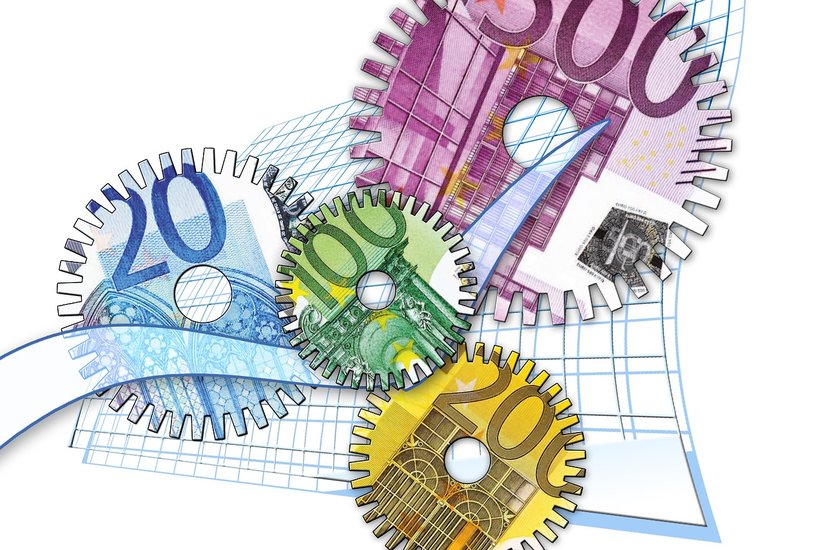
The Calculus of Risk: Assessment and Mitigation
For lenders, assessing credit risk is a highly sophisticated endeavor, evolving rapidly with advancements in data analytics and artificial intelligence. Traditionally, the "5 Cs of Credit" provided a framework:
- Character: The applicant's credit history and willingness to repay.
- Capacity: The ability to repay debt, measured by income-to-debt ratios (e.g., debt-to-income ratios for mortgages often capped around 43%).
- Capital: The borrower's equity or financial stake, indicating commitment and ability to absorb losses.
- Collateral: Assets pledged to secure the loan, mitigating lender risk in case of default.
- Conditions: The specific terms of the loan and prevailing economic conditions.
Today, machine learning algorithms analyze thousands of data points – from transaction histories and behavioral patterns to open banking data – to create highly granular risk profiles. This has led to more precise pricing of credit, where interest rates are directly correlated with the calculated probability of default. For instance, during economic downturns, average consumer delinquency rates on credit cards might rise from a typical 2-3% to 5-7%, demonstrating the cyclical nature of credit risk. Robust risk models are critical in these periods to differentiate between temporary hardship and systemic default risk.
The Evolving Landscape: Fintech, Regulation, and Global Interconnectedness
The credit industry is in a perpetual state of flux, driven by technological innovation and evolving regulatory frameworks. Fintech companies are disrupting traditional lending models by leveraging alternative data sources (e.g., utility payments, rental history, social media activity) to assess creditworthiness, particularly for "thin-file" or "credit invisible" populations, which constitute an estimated 26 million adults in the U.S. alone. This expansion of credit access can stimulate economic participation but also introduces new dimensions of risk.
Regulators, such as the Consumer Financial Protection Bureau (CFPB) in the U.S. and the European Banking Authority (EBA), continually adapt to protect consumers and ensure systemic stability. The Basel Accords, for instance, set international banking standards for capital adequacy, reducing the risk of global financial contagion stemming from excessive credit risk exposure.
Comparative Analysis: Traditional vs. Fintech Credit Metrics
| Feature | Traditional Lending | Fintech Lending |
|---|---|---|
| Primary Data Source | Credit Bureau Scores (FICO, VantageScore) | Alternative Data (e.g., utility bills, cash flow data, social media) + Credit Scores |
| Underwriting Process | Manual review, standardized models, strict criteria | Automated algorithms, AI/ML-driven, dynamic risk assessment |
| Approval Speed | Days to Weeks | Minutes to Hours |
| Target Market | Established credit histories, prime borrowers | Broader spectrum, including thin-file, subprime, and niche segments |
| Risk Management | Conservative, reliant on historical data and regulations | Agile, adaptive, continuous monitoring via real-time data |

Strategic Credit Management: A Directive for Prosperity
Effective credit management is not merely a defensive posture against risk; it is a proactive strategy for prosperity. For individuals, this entails rigorous monitoring of credit reports (an estimated 20-25% of reports contain errors), maintaining low credit utilization, and establishing a diverse yet manageable credit mix. The statistical advantage of a high credit score is tangible: lower interest rates on mortgages (e.g., a 1% difference on a $300,000, 30-year mortgage can save over $60,000 in interest), better insurance premiums, and access to more favorable financial products.
For corporations, robust credit management encompasses optimizing working capital, carefully extending trade credit to customers, and strategically leveraging debt to finance growth without impairing solvency. Maintaining healthy debt-to-equity ratios and interest coverage ratios are critical indicators for investors and creditors alike, directly influencing bond ratings and equity valuations. Companies with strong credit profiles can access capital at significantly lower costs, improving their competitive advantage and profitability.
Analyst's Summary: The Future of Credit
Credit's journey is one of continuous evolution. The increasing digitization of financial services, coupled with the analytical prowess of AI, promises a future where credit assessment is more inclusive, precise, and instantaneous. However, this evolution also demands heightened vigilance regarding data privacy, algorithmic bias, and systemic risk. The fundamental principle – trust in repayment – remains immutable, but the mechanisms through which that trust is evaluated and extended will only become more sophisticated, further cementing credit's role as the indispensable backbone of economic activity. Understanding its complexities is not just beneficial; it is imperative for navigating the modern financial world.
In conclusion, credit is far more than a simple transaction; it is a complex, dynamic system underpinning virtually every facet of modern economic life. From enabling individual aspirations to fueling global commerce and shaping national fiscal policies, its influence is pervasive and profound. The meticulous analysis of its components, drivers, and evolving landscape reveals its enduring power as the unseen architect, continually building and rebuilding the foundations of prosperity.
Deja una respuesta